Experiencing the Grand Annual Kandy Esala Perahera Festival Procession
Witness Kandy's sacred annual procession from a carefully arranged vantage point as drummers, dancers, torchbearers and ceremonial traditions move through the historic city.
SeasonalCultural HeritageUNESCO Related
The story
About the experience
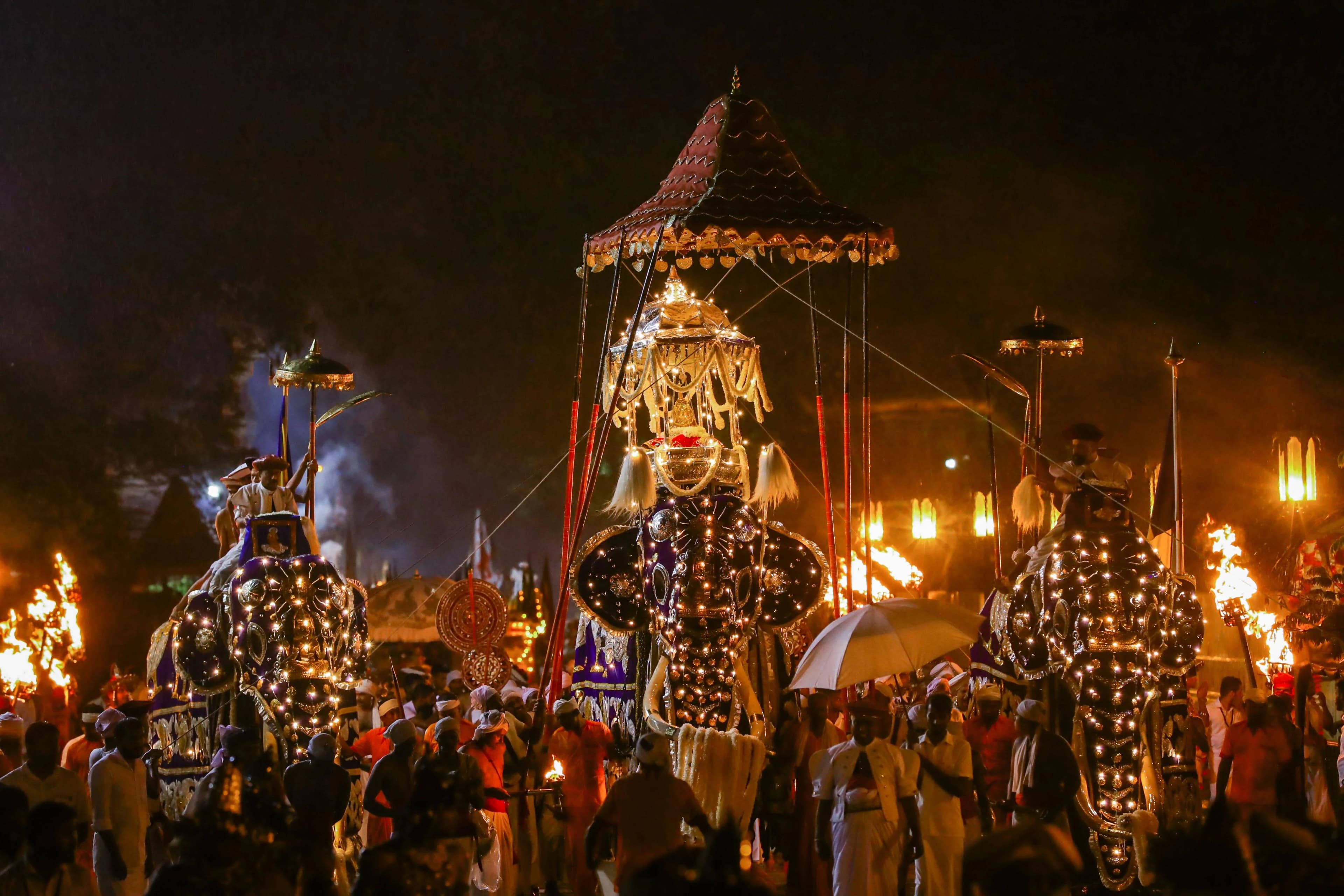
The Kandy Esala Perahera is first a sacred religious observance and only then a visual spectacle. Held in honour of the Sacred Tooth Relic, its annual sequence brings together temple traditions, Kandyan drumming and dance, torchlight and ceremonial processions through Kandy's historic streets.
Each procession night has its own place in the official calendar, building from the Kumbal Perahera towards the later Randoli processions. A carefully planned visit helps travellers understand what they are seeing, arrive through road closures and watch with the respect owed to a living tradition rather than consuming it as a performance.
In pictures
Image credits: Kandy Esala Perahera and Wheel on Fire: Daniel Liabeuf (CC BY-SA 3.0); fire spinning: Richard Shaw (CC BY 2.0); fire spirals: Sachin Kaveesha Fernando (CC BY-SA 4.0); festival procession: Omar AV (CC BY 3.0).
The moments
Highlights worth remembering
The measured power of Kandyan drumming and traditional dance ensembles
Torchbearers and fire performers illuminating Kandy's night streets
The ceremonial rhythm of an observance shaped by temple traditions
A historic city transformed by sound, light, devotion and anticipation
Context from a local host so the procession is understood, not merely photographed
Distinctly this place
What makes it unique
It is a living religious tradition connected to the Temple of the Sacred Tooth Relic
The experience unfolds within Kandy's UNESCO-listed sacred-city setting, although the procession is not separately UNESCO-inscribed
No two nights are identical: the official sequence develops from Kumbal to Randoli processions
Meaning comes from ceremony and continuity as much as scale and pageantry
Duration
Evening experience; duration varies by procession night
Best time to visit
Seasonal — official dates vary annually in July or August
Where
Kandy
This is a sacred Buddhist observance; dress modestly and follow instructions from temple, police and event officials.
Official dates, procession routes and start times can change and must be checked for the travel year.
Reserved seating is sold by third parties and is not the same as admission to the public street route.
Expect road closures, dense crowds, a long evening and limited access to facilities once seated.
The procession traditionally includes ceremonial elephants; ask your journey designer for context if this affects your decision.
Thoughtfully arranged
What’s included
The Ceylon Edition verification of the official annual schedule and route
Pre-event cultural and etiquette briefing
Arrival and departure planning around city road closures
Viewing arrangement exactly as specified in the personalised proposal
Reserved seating only when explicitly listed and confirmed
Close by
Nearby attractions
Temple of the Sacred Tooth Relic
Kandy Lake promenade
International Buddhist Museum and Kandy National Museum
Udawattakele Forest Reserve
Royal Botanic Gardens, Peradeniya
Local perspective
Traveller tips
Plan months ahead, especially for later Randoli procession nights and confirmed reserved seating.
Ask your journey designer to explain the difference between Kumbal and Randoli nights before choosing.
Carry only essentials, water and a light rain layer; large bags make crowd movement difficult.
Use flash sparingly and never where event officials or religious etiquette prohibit it.
Agree on a post-procession meeting point in advance because mobile coverage and road access can become difficult.
Make it part of your story
Design my journey with this experience.
Choose who will take part and the experience rate that suits your journey.