Skip to content
THE CEYLON EDITIONBespoke journeys through Sri Lanka.
Polonnaruwa, Sri Lanka
All destinations

North Central

Polonnaruwa

A remarkably coherent medieval capital of sculpted stone, monumental reservoirs and shaded routes made for slow exploration.

Plan Your Journey

A closer look

Why visit Polonnaruwa?

Polonnaruwa offers one of Sri Lanka’s most legible ancient landscapes. Royal precincts, monasteries and the serene figures of Gal Vihara unfold across a relatively compact area, while Parakrama Samudra gives the city an expansive horizon. Bicycle or carefully paced vehicle exploration allows the architecture and hydraulic ambition to be understood together. The experience gains depth at the archaeological museum and beside the reservoir at day’s end. Together, these places explain how royal power, Buddhist devotion, urban design and water management operated as one system. Polonnaruwa rewards travellers who look beyond individual monuments to the complete medieval landscape.

Heritage Edition
AhungallaAnuradhapuraArugam BayBelihul OyaBentotaColomboDambullaEllaGalleHikkaduwaJaffnaKalpitiyaKalutaraKandyKataragamaKitulgalaMinneriyaMirissaNuwara EliyaPasikudahPolonnaruwaSigiriyaTangalleTrincomaleeUdawalaweWeligamaWilpattuYalaHambantota
Polonnaruwa is highlighted

Why visit

Come for an ancient capital that feels spacious, coherent and deeply connected to the water engineering of the dry zone.

Historical importance

Polonnaruwa became Sri Lanka’s second great capital after Anuradhapura and flourished especially in the eleventh and twelfth centuries. Its monuments reflect major royal, religious and engineering achievements.

Cultural significance

Buddhist monasteries and Hindu monuments show the cultural connections that shaped the medieval capital. Gal Vihara remains one of the island’s most revered sculptural ensembles.

UNESCO information

UNESCO World Heritage

The Ancient City of Polonnaruwa was inscribed on the UNESCO World Heritage List in 1982. UNESCO recognises the exceptional monumental remains of Sri Lanka’s medieval capital, including its royal, religious and garden-city landscape.

Nature & wildlife

Parakrama Samudra and surrounding dry-zone habitats attract water birds and support farming communities. Macaques are common among the ruins and should not be fed.

Best time to visit

January to March is often comfortable. June to September is generally drier but can be very hot, making an early start and midday rest essential.

Weather in Polonnaruwa

27°Partly cloudy
77% humidity16 km/h wind

Seven-day outlook

Fri27° 27°
Today37° 26°
Tomorrow35° 26°
Mon36° 27°
Tue34° 27°
Wed35° 27°
Thu35° 26°

Seasonal outlook

Hot and relatively dry, usually 27–34°C. The strongest rains tend to arrive with the northeast monsoon later in the year.

Model forecast · MET Norway · Updated every 30 minutes

Destination insights

Discover more about Polonnaruwa

Local character, places worth a detour and thoughtful details for a more rewarding stay.

The character of Polonnaruwa

Local highlights

  1. Gal Vihara’s serene rock-cut figures viewed in gentle morning light

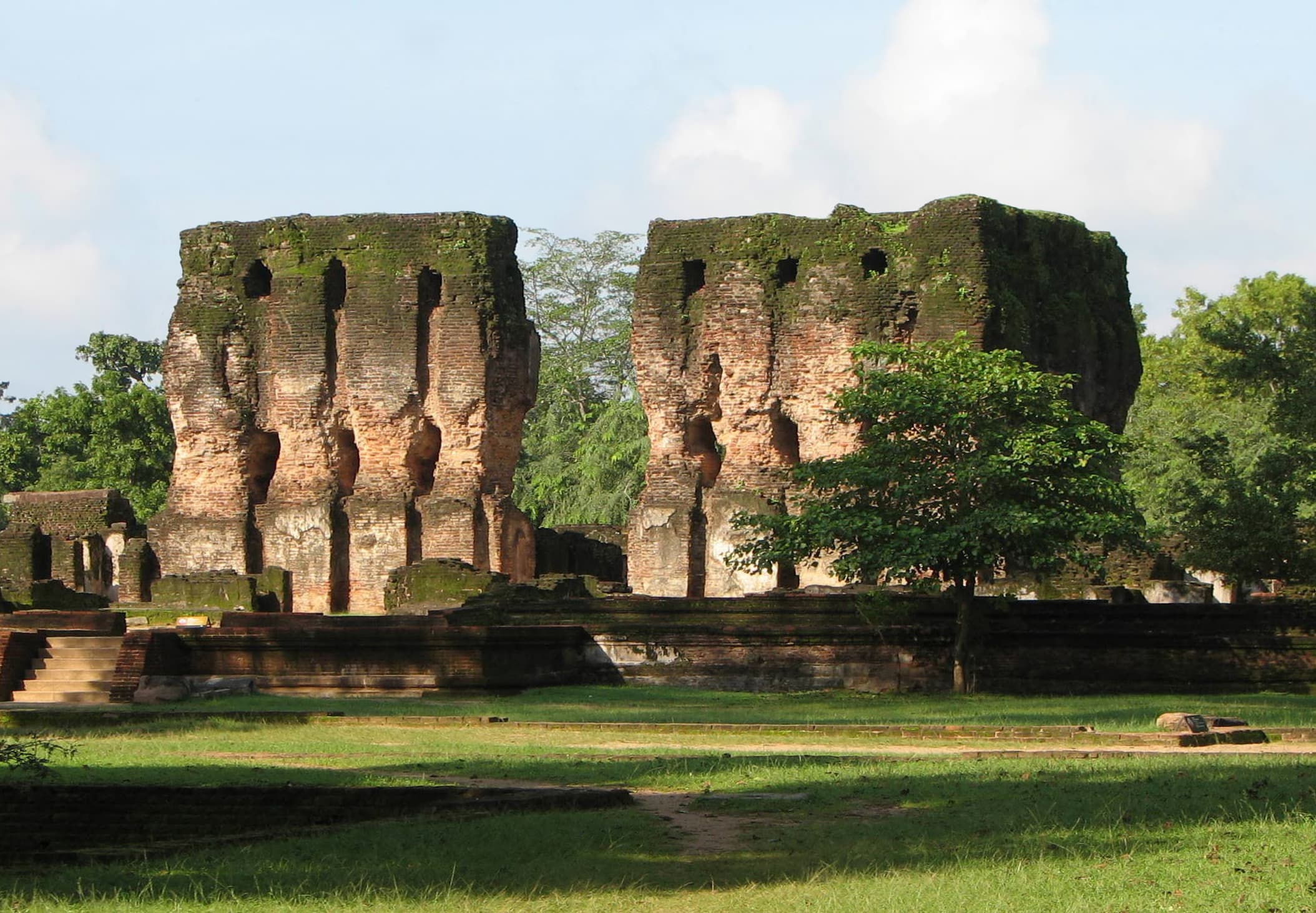
  2. Royal Palace ruins and the architectural concentration of the Sacred Quadrangle

  3. Lankatilaka’s towering brick sanctuary and the great Rankoth Vehera stupa

  4. Slow cycling between shaded monuments across the medieval garden city

  5. Sunset and birdlife along the vast waters of Parakrama Samudra

Travel well

Before you go

  • Start early and carry ample water and sun protection.

  • Dress modestly at sacred monuments and never pose with your back to a Buddha image.

  • Use a guide or museum visit to understand the site’s chronology.

  • Keep food secured around macaques.

Accommodation

Places to stay

No published accommodation is available here yet.

Make it yours

Place Polonnaruwa on your route.

Plan Your Journey